
analysisabout 1 hour ago
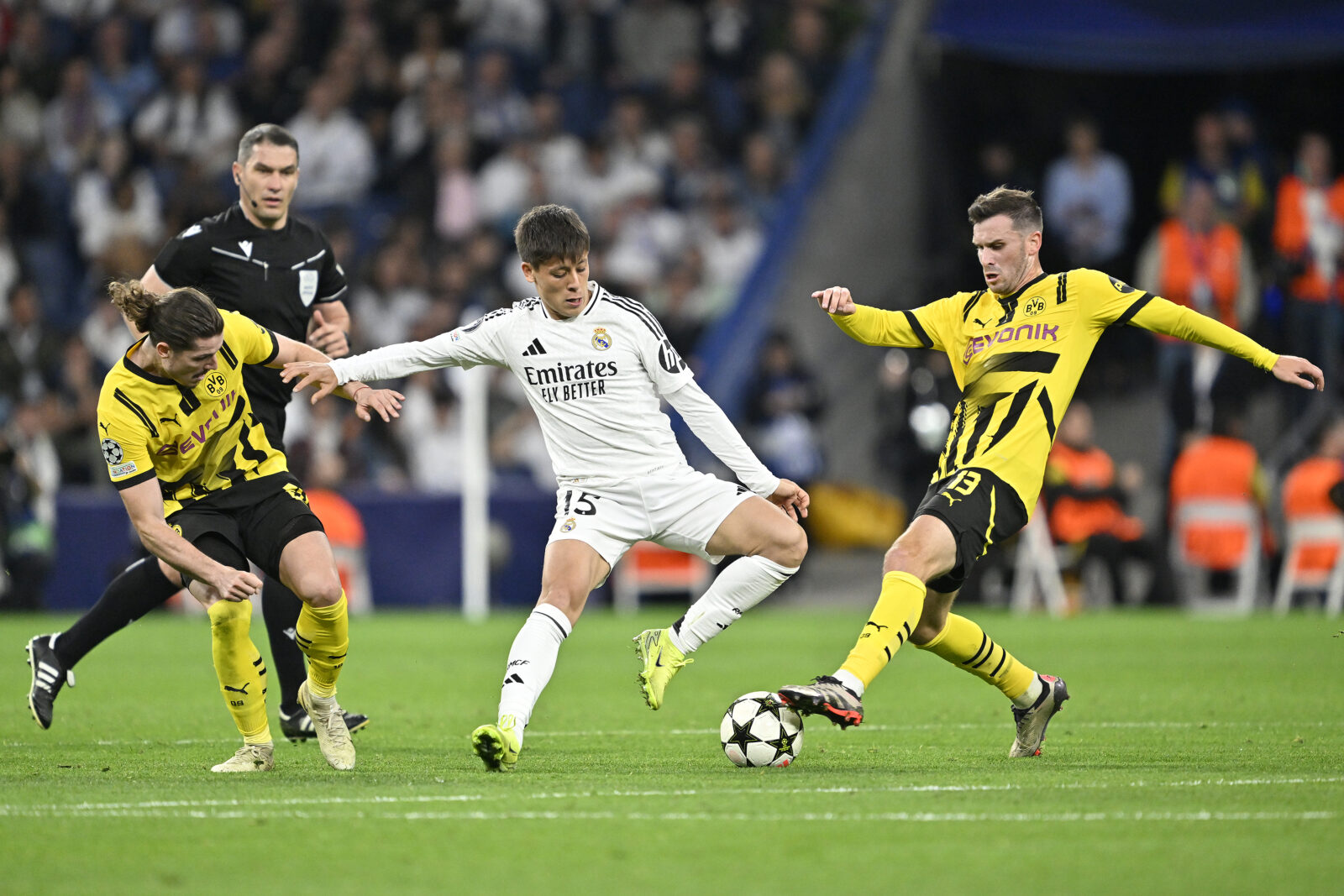
De Bruyne vs Arda Güler — The One Truth Nobody Wants to Admit
One is a fading titan. The other, a rising storm. We cut through the hype to settle the De Bruyne vs Arda Güler debate once and for all in 2026.

Once considered outdated, the back three is now dominating Europe’s top leagues. From Enzo Maresca at Chelsea to Italy’s elite, discover how this formation is reshaping modern football in 2026.
Back three football refers to a tactical system where three central defenders form the foundation of the defence, supported by two wing-backs who operate as hybrid defenders and wingers. This structure typically evolves into a 3-4-3 in attack or a 3-5-2 when defending, offering greater control of midfield and width without overloading the back line.
Unlike a traditional back four, the trio allows for better cover against through balls and improved passing angles out from the back. The wing-backs are crucial—they must possess exceptional stamina, pace, and technical ability to contribute at both ends. This system thrives on fluidity, requiring high tactical intelligence from all players.
"The back three isn't just a formation—it's a philosophy," say tactical analysts. "It demands unity, discipline, and relentless movement."
The back three isn’t a 2026 invention. Its roots trace back to the 1974 World Cup, where Netherlands used a fluid 3-4-3 under Rinus Michels, with Johan Cruyff operating as a false nine. This ‘Total Football’ approach overwhelmed opponents with positional interchange and relentless pressing.
In the 1980s, Italian managers like Valerio Bacigalupi refined the system, but it was Arrigo Sacchi at AC Milan who brought it to global prominence. His high-pressing 3-5-2 unit, featuring Franco Baresi as a libero, dominated Europe, winning back-to-back European Cups in 1989 and 1990.
Fast forward to the 2010s: Antonio Conte revived the system at Juventus, winning three consecutive Serie A titles. He then implemented it at Chelsea in 2016-17, securing the Premier League with a 3-4-3 that overwhelmed opponents through wing-back overloads. Since then, managers across Europe have adapted it to modern demands.
In the 2025-26 season, the back three is experiencing a renaissance. At Chelsea, Enzo Maresca has fully embraced the 3-4-3, utilising versatile defenders like Levi Colwill and Benoît Badiashile in the central trio. His wing-backs, including Ben Chilwell and Marc Cucurella, are instructed to push high, stretching opposition defences and creating crossing opportunities.
Maresca’s system relies on a double pivot in midfield—often Moisés Caicedo and Enzo Fernández—to recycle possession and launch transitions. Up front, a mobile striker like Nicolas Jackson drops deep, linking play and creating space. This structure has made Chelsea one of the most tactically cohesive sides in the Premier League, reportedly in excellent form during the second half of the season.
Elsewhere, Inter Milan under Simone Inzaghi continues to thrive with a disciplined 3-5-2, while Luciano Spalletti has used a back three with the Italian national team to great effect. Even in Germany and Spain, clubs are experimenting with the system to counter high-pressing opponents.
The back three solves several modern tactical puzzles. It neutralises inverted wingers—common in systems like Pep Guardiola’s—by providing cover in central zones. It also allows teams to dominate midfield numbers, especially when facing a 4-3-3. With wing-backs occupying full-backs, the central midfielders gain more freedom.
Additionally, the system encourages the development of technically gifted defenders who can carry the ball forward or switch play. In an era where clean sheets and possession efficiency are prized, the back three offers a balanced solution. It’s no longer seen as defensive or rigid—it’s a platform for proactive, dynamic football.
Q: What is back three in football?
A: The back three is a defensive formation using three central defenders instead of four. Supported by wing-backs, it allows for greater midfield control and attacking width, commonly used in systems like 3-4-3 or 3-5-2.
Q: Which teams use back three?
A: In 2026, Chelsea under Enzo Maresca, Inter Milan, and the Italian national team are prominent users. Several Premier League and Serie A sides have adopted variations of the system for its tactical flexibility.
Q: Who invented back three?
A: There is no single inventor, but Arrigo Sacchi and Valerio Bacigalupi were key figures in its tactical development. Antonio Conte modernised it for the 21st century, proving its effectiveness in top leagues.