What Is Half-spaces Football? The Simple Explanation
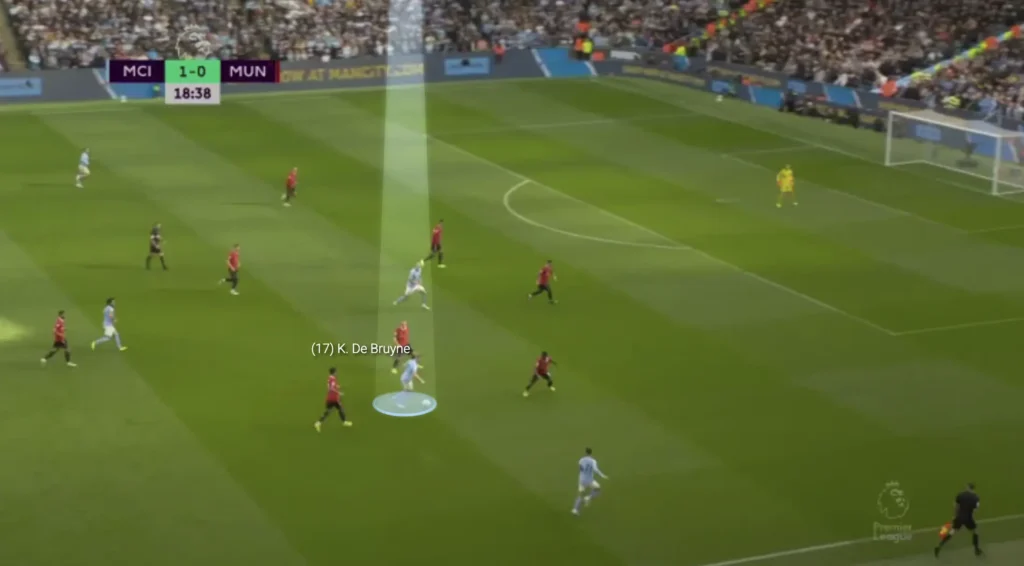
Half-spaces football refers to the tactical exploitation of the narrow zones between the central corridor and the wide touchlines — areas where attackers can receive between the lines, turn, and threaten the goal without drawing full defensive attention. These zones, often overlooked in traditional formations, are now central to how elite teams break down compact defences in 2026.
Unlike wingers who hug the touchline, players operating in the half-spaces stay narrow, forcing defenders into difficult choices: step out and risk being turned, or stay passive and allow time and space. Coaches like Will Still at RC Lens have built entire systems around this concept, proving that tactical intelligence can rival financial power. The half-spaces allow for quicker combinations, better vision, and more dangerous shooting angles.
- The half-spaces are the vertical channels just inside the wings
- They enable players to receive between defensive lines
- Will Still has mastered their use at RC Lens
- Top exponents include Bernardo Silva, Jamal Musiala, and David Alaba
The Evolution: From Niche Idea to Core Principle
The concept isn’t new. In the early 2010s, Pep Guardiola began experimenting with false wingers at Barcelona, asking players like Lionel Messi to drift inside from the right. This created overloads in central areas while stretching the opposition horizontally. The term 'half-space' gained traction through analysts like Michael Cox and Zonal Marking, but it was Manchester City’s dominance from 2018 onward that cemented its importance.
A pivotal moment came in City’s 3-1 win over Liverpool in April 2018, where Bernardo Silva operated almost exclusively in the right half-space, linking midfield and attack. Analysts later described it as a masterclass in positional play, showing how a single zone could dictate a match’s flow. Since then, the half-space has evolved from a tactical nuance to a fundamental building block.
How Top Teams Use Half-spaces Football in 2026
In the 2025-26 season, half-spaces football is no longer optional — it’s essential. At Manchester City, Phil Foden and Riyad Mahrez rotate between wing and half-space, but it’s in the narrower zones where they’re most dangerous. Bayern Munich use Joshua Kimmich as a half-space playmaker, while Harry Kane drops to create overloads. Liverpool, under Arne Slot, have integrated Dominik Szoboszlai as a right-sided eight who never goes wide, instead occupying the left half-space of the opponent.
Perhaps the most fascinating case is RC Lens under Will Still. With limited resources, Still has implemented a 3-4-1-2 where the wing-backs push high but the central midfielders and the number 10 occupy the half-spaces. This structure has disrupted traditional Ligue 1 hierarchies, with Lens reportedly in excellent form and challenging for European spots. Experts suggest Still’s system maximises efficiency by avoiding chaotic wide play in favour of controlled central progression.
How to Defend Against Half-spaces Football
Stopping half-space dominance requires disciplined shape and intelligent pressing. Defenders must resist the urge to follow mobile attackers into these zones, as it opens up central space. Instead, midfielders need to cut passing lanes early. At Arsenal, Declan Rice has been tasked with covering half-space entries, using his positioning to intercept switches from flank to flank.
Another solution is using inverted full-backs — defenders like Trent Alexander-Arnold or David Alaba who operate as central playmakers when their side has possession but tuck in defensively to block half-space corridors. The challenge is balance: overcommit and you leave the flanks exposed; undercommit and you allow elite playmakers time to pick passes or shoot. As experts suggest, the future of defending lies in compactness and anticipation, not just physicality.
Frequently Asked Questions
Q: What is half-spaces in football?
A: Half-spaces are the vertical zones between the central third and the wide areas of the pitch. They are used by attackers and midfielders to receive the ball between defensive lines, allowing them to turn, combine, or shoot with more time and better angles than in the crowded centre.
Q: Which teams use half-spaces?
A: Manchester City, Bayern Munich, Liverpool, and RC Lens are among the most prominent teams using half-spaces football in 2026. Each adapts the concept differently, but all rely on technically gifted players who can thrive in tight spaces and make quick decisions under pressure.
Q: Who invented half-spaces?
A: The half-spaces weren’t “invented” by one person, but Pep Guardiola popularised their systematic use at Barcelona and Manchester City. Analysts and coaches like Will Still have since refined and expanded the concept, making it a cornerstone of modern tactical play.