What Is False Nine Football? The Simple Explanation
A false nine is an attacker who starts in the central striker position but regularly retreats into midfield. This pulls centre-backs out of position, opening gaps for teammates.
Unlike a classic number 9, he doesn’t stay in the box. His real job is to link play, draw defenders, and create. He’s a hybrid: part striker, part playmaker.
The History: How This Concept Evolved
The idea isn’t new. In the 1930s, Hugo Meisl’s Austrian Wunderteam used a withdrawn forward to confuse rigid defences. But the modern false nine was born in 2009.
At Camp Nou, Lionel Messi under Pep Guardiola played as a false nine in the 6-2 Clásico win over Real Madrid. He dropped deep, dragging Sergio Ramos and Pepe out of position, allowing Xavi and Iniesta to dominate.
"He wasn’t a striker. He was the brain of the attack." — The Guardian, 2009
Later, Cesc Fàbregas for Spain in Euro 2012 played a similar role. In the final against Italy, his deep positioning allowed David Silva and Andrés Iniesta to exploit space behind the defence.
How the Best Teams Use It Today
In 2025-2026, Xabi Alonso at Bayer Leverkusen has refined the false nine system. His team combines high pressing with fluid positional play, using the central attacker as a pivot.
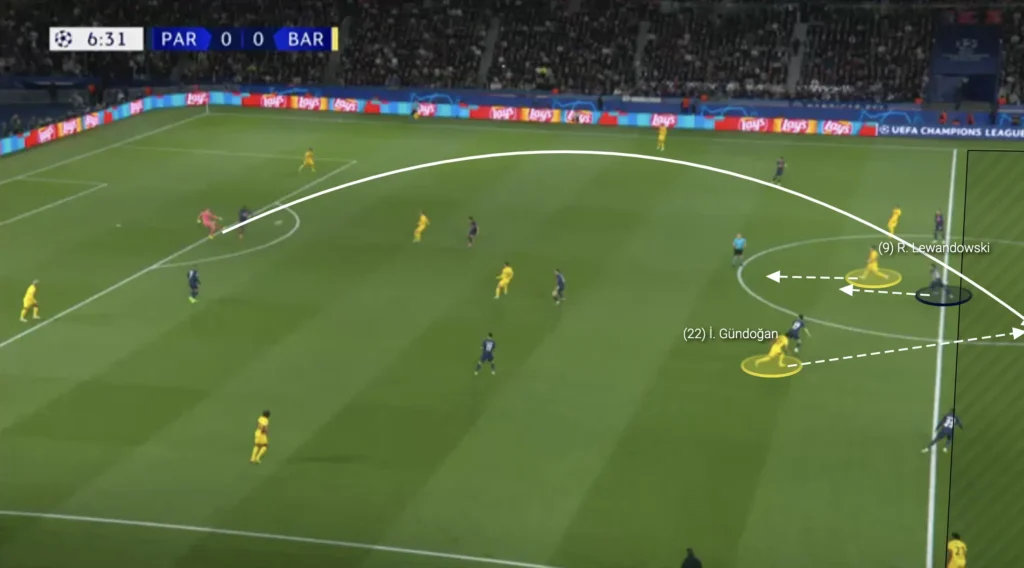
Leverkusen’s midfield stays compact. When the false nine drops, it forces opponents to decide: follow him and leave space, or stay put and risk being overrun.
The player in the role is widely regarded as one of the best at linking midfield and attack. He has continued his impressive development, becoming the engine of Alonso’s tactical vision.
How to Defend Against It
Defending the false nine requires discipline. The centre-back must resist following him into midfield. If he does, the space behind becomes deadly.
Some managers use a holding midfielder — a destroyer who shadows the false nine. In 2023, Inter’s Niccolò Barella marked Napoli’s deep-lying forward in a key Serie A clash, cutting off passing lanes.
Another solution: a high defensive line with tight coordination. This traps the false nine in an offside position when he drops. But one misstep, and the attack is through.
Why This Concept Is Shaping Modern Football
The false nine represents a shift toward tactical intelligence over physical dominance. It rewards players who read the game, not just those who score.
Academies now train young forwards to drop, receive, and turn — not just sprint and shoot. The role also maximises space in congested penalty areas.
In 2026, teams that master false nine football dominate knockout stages. They control tempo, create overloads, and dismantle rigid defences with precision.
Q: Who is the best false nine in 2026?
A: While no single name dominates headlines, the Leverkusen attacker under Xabi Alonso is believed to be among the top performers this season. His understanding of space and timing makes him lethal.
Q: Does a false nine score fewer goals?
A: Often, yes. His primary role is creation. But the best, like Messi, still score. The key is versatility — knowing when to pass and when to shoot.
Q: Can you play two false nines?
A: It’s risky. Two deep-dropping forwards can leave the attack unbalanced. Most successful systems use one false nine with dynamic wingers or an attacking midfielder supporting.